Dry Beer and High-Attenuation Brewing: A Buyer Guide to Glucoamylase Premium
For breweries running dry, low-carb, high-gravity or adjunct beers: where Glucoamylase Premium fits in the mash, pilot trials, QC, COA/TDS/SDS and how to request a quote. Use Glucoamylase Premium in brewing with practical pH, temperature, dosage, QC, COA/TDS/SDS, pilot validation, and cost-in-use guidance.
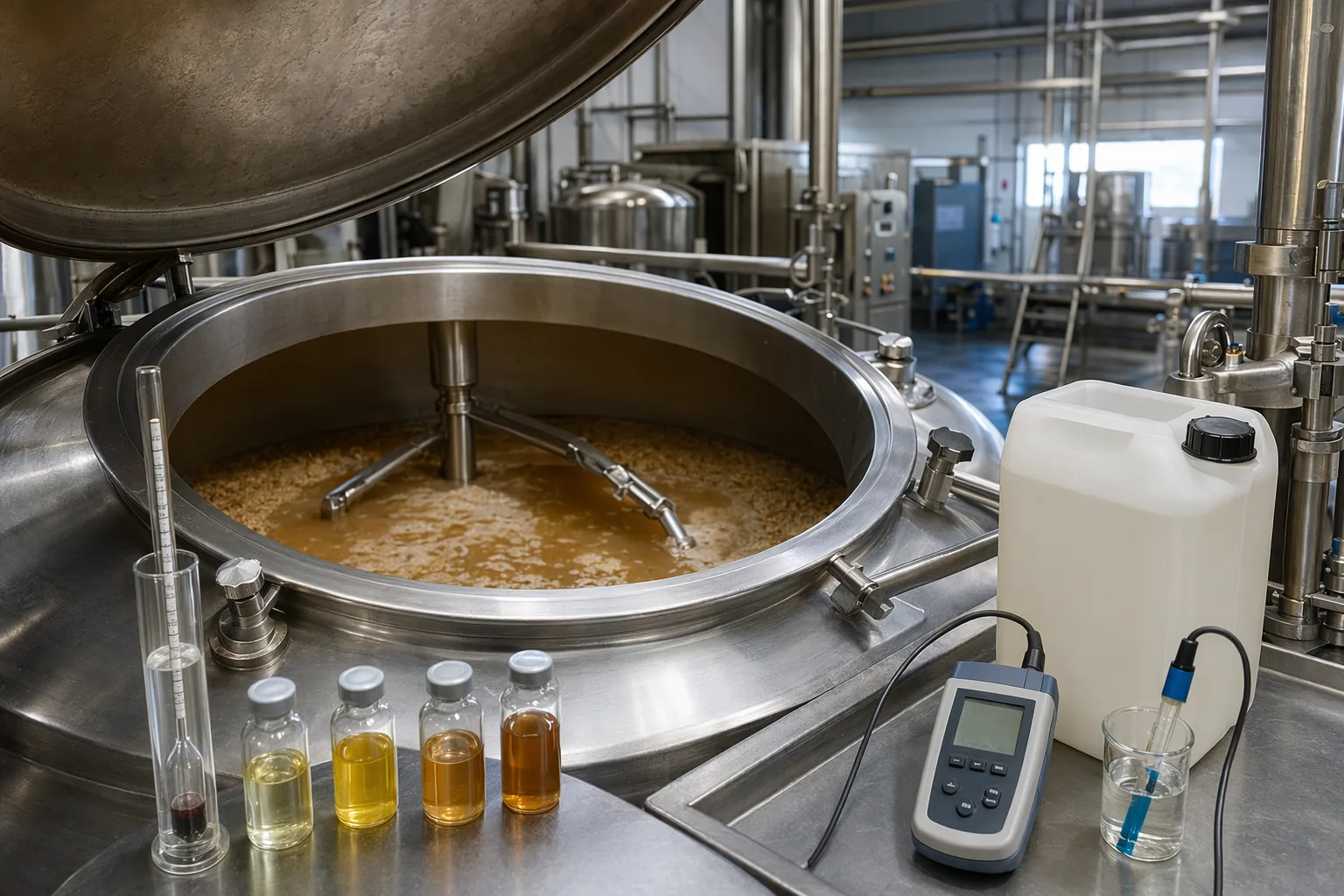
For breweries and brewing-ingredient buyers who need reliable starch-to-glucose conversion, improved fermentability and consistent process control in adjunct, high-gravity, low-carbohydrate or dry beers. Glucoamylase Premium is a saccharification enzyme from Aspergillus niger, supplied as a dark amber liquid or light brown powder in 25 kg drums or 1000 L IBC.
To request a quote, send the format (liquid or powder), the quantity and the destination country to hello@mail.enzymeprime.com, or use the quote form on our home page.
What Is Glucoamylase Enzyme in Brewing?
Glucoamylase is an exo-acting saccharification enzyme that releases glucose units from the non-reducing ends of starch, dextrins, maltodextrins, and related oligosaccharides. In brewing, the glucoamylase enzyme function is different from alpha-amylase: alpha-amylase primarily liquefies starch by cutting internal bonds, while glucoamylase continues saccharification toward fermentable glucose. This makes it valuable when brewers need higher apparent attenuation, lower residual dextrin, or a drier finish in adjunct-heavy, high-gravity, low-carbohydrate, or specialty beer formulations. For B2B formulation teams, the key question is not simply what is glucoamylase enzyme, but how it behaves in a specific mash, wort, or fermentation process. Glucoamylase Premium should be assessed using the enzyme activity stated on the TDS and COA, then validated under the brewery’s own raw material, process, and yeast conditions.
Supports starch to glucose enzyme conversion after liquefaction • Improves fermentable sugar availability when process conditions are suitable • Complements, rather than directly replaces, alpha-amylase
Where to Add Glucoamylase Premium in the Brewing Process
Glucoamylase brewing use can occur during mash saccharification, in a dedicated conversion hold, or in fermentation, depending on the beer objective and process controls. Mash or conversion-stage addition gives tighter control over temperature, pH, and enzyme inactivation before fermentation. Fermentation-stage addition may extend dextrin conversion while yeast consumes glucose, but it can continue changing attenuation unless the process is validated and controlled. For industrial breweries, the best addition point is usually determined through pilot trials comparing extract yield, fermentability, residence time, and flavor impact. When adjuncts such as corn, rice, or refined starch are used, upstream liquefaction with appropriate amylase activity is often needed before glucoamylase can perform efficiently. Glucoamylase Premium should be dispersed evenly into the mash, wort, or fermenter to avoid localized over- or under-treatment.
Mash addition: stronger process control and easier thermal inactivation • Conversion tank addition: useful for defined saccharification targets • Fermenter addition: requires careful attenuation and endpoint monitoring
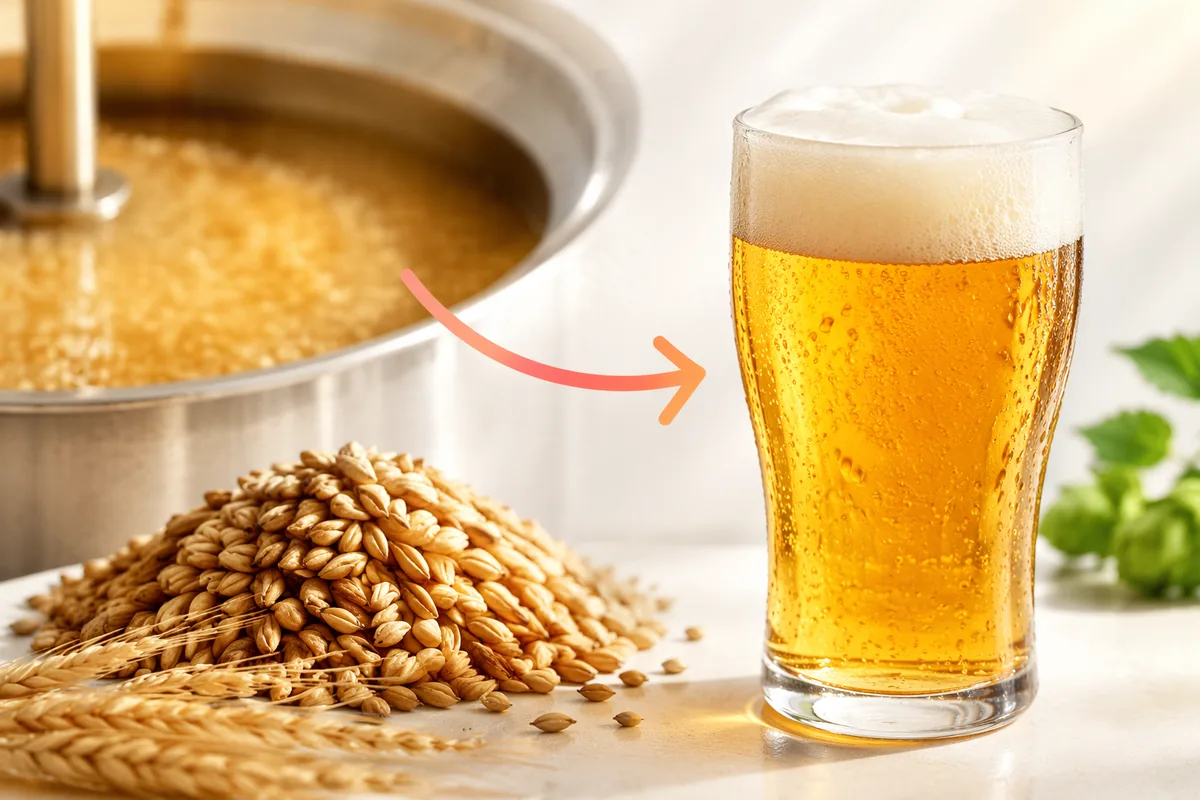
Process Conditions for Formulation Trials
Exact operating conditions depend on the activity grade, substrate, and brewery process, so the COA and TDS should be used as the controlling documents. The stated optimum for Glucoamylase Premium is pH 3.5–5.0 and 58°C–65°C, which fits a conversion-stage hold; fermentation-stage applications operate at normal fermentation temperatures and convert more slowly. Set the starting dose from the activity stated on the TDS, then run a dose-response study, especially for high-adjunct, high-gravity, or low-residual-carbohydrate targets. Avoid assuming that a homebrew-style enzyme glucoamylase dose translates directly to commercial brewing; industrial cost-in-use should be activity-normalized.
Screen pH, temperature, dosage, and contact time together • Use activity units from the TDS when comparing lots or suppliers • Confirm thermal stability and inactivation conditions before scale-up
Compare Brewing Glucoamylase by Process Fit, Not Headline Activity
Industrial buyers often start by comparing activity units, but glucoamylase brewing performance depends on how well the enzyme fits the mash, adjunct, or fermentation process. Glucoamylase hydrolyzes alpha-1,4 and, more slowly, alpha-1,6 glucosidic bonds from non-reducing starch and dextrin ends, releasing glucose for yeast fermentation. In brewing, this can support higher attenuation, low-carbohydrate beer production, adjunct conversion, or improved fermentable extract when used with the right liquefaction and mashing strategy. A premium AMG-style product should be evaluated as a starch to glucose enzyme within the full process, not as an isolated additive. Key comparison points include operational pH, temperature tolerance, substrate profile, required contact time, dosing control, and downstream impact on flavor and filtration. For B2B procurement, the best choice is the enzyme that delivers repeatable fermentability and predictable cost-in-use under validated plant conditions.
Prioritize process compatibility over activity claims alone. • Match enzyme use point to mash, adjunct cook, or fermentation objectives. • Confirm the product is intended for industrial brewing use.
Glucoamylase vs Amylase Enzyme: Formulation Roles
The comparison of glucoamylase vs amylase enzyme is important for formulation design. Alpha-amylase rapidly reduces starch viscosity and generates shorter dextrins by cleaving internal alpha-1,4 bonds. Glucoamylase then works from chain ends, releasing glucose from alpha-1,4 linkages and, more slowly, some alpha-1,6 branch points depending on substrate structure and enzyme profile. In practical brewing terms, alpha-amylase helps make starch accessible, while glucoamylase increases fermentable glucose and can reduce residual body. Overuse can push beer drier than intended, so sensory and attenuation targets must guide dosage. The two enzymes are often evaluated as a system in adjunct brewing, high gravity brewing, and specialized formulations requiring defined carbohydrate profiles. Glucoamylase Premium should be positioned as a saccharification tool within the total mash enzyme strategy, not as a universal fix for poor gelatinization or incomplete liquefaction.
Alpha-amylase: liquefaction and dextrin generation • Glucoamylase: glucose release and fermentability increase • Balanced use helps manage attenuation, body, and extract recovery
QC Checks for Industrial Brewing Validation
A successful glucoamylase enzyme brewing trial should be measured with analytical and sensory controls, not judged only by final gravity. Common QC checks include mash iodine reaction, viscosity, wort gravity, pH, fermentable sugar profile, apparent attenuation, real degree of fermentation, and residual dextrin profile. HPLC or enzymatic assays for glucose, maltose, maltotriose, and higher saccharides are useful when building a formulation database. Fermentation monitoring should include gravity drop, yeast performance, diacetyl control, alcohol yield, and endpoint stability. Finished beer checks should include alcohol by volume, extract, haze risk, microbiological status, and sensory review for dryness, balance, and mouthfeel. For each trial, record enzyme lot number, dosage, addition point, substrate composition, hold time, temperature, and pH so performance can be traced back to the COA and production batch.
Measure fermentability and sugar profile, not only final gravity • Track enzyme lot number and dose for traceability • Include sensory review when targeting drier beer profiles
Pilot Validation: What to Measure Before Scale-Up
Pilot validation should reproduce the intended use point, residence time, and process variability of the brewery. For mash or adjunct saccharification, monitor pH, temperature, mash thickness, iodine reaction, dextrose equivalent trend if relevant, glucose formation, and fermentable sugar profile. For fermentation dosing, track original extract, apparent and real attenuation, alcohol yield, residual carbohydrates, fermentation rate, yeast performance, and final beer specifications. Sensory review is essential because higher glucose availability may alter fermentation kinetics and flavor balance. Filtration and clarification should also be checked, especially when high adjunct levels or enzyme-assisted attenuation are involved. A good glucoamylase supplier for brewing should help design a dosage matrix and interpret results without forcing immediate scale-up. The goal is to confirm the lowest reliable dose that reaches specification under realistic operating conditions.
Run a control, low dose, target dose, and high dose where feasible. • Measure both analytical performance and sensory impact. • Confirm repeatability across more than one brew or fermentation.
Documentation to request before supplier comparison
Before approving any industrial glucoamylase brewing candidate, request the current technical data sheet, certificate of analysis, and safety data sheet. The TDS should state enzyme type, declared activity, recommended pH and temperature ranges, appearance, solubility or dispersion behavior, storage conditions, shelf-life guidance, and suggested applications such as brewing, glucose syrup, or high fructose corn syrup saccharification. The COA should identify lot number, activity result, relevant quality parameters, and release criteria. The SDS should support safe handling, storage, spill response, and worker protection planning. Avoid relying on unsupported claims or informal datasheets without lot-specific confirmation. If your site has allergen, GMO, halal, kosher, or regional regulatory requirements, ask the supplier for available statements rather than assuming certification. Strong documentation helps procurement compare glucoamylase suppliers consistently and gives production, quality, and EHS teams a shared approval basis.
Request COA, TDS, and SDS for the exact product and lot where possible. • Check whether declared activity units are comparable across suppliers. • Ask for written change-notification practices.
Supplier Qualification and Cost-in-Use
For B2B buyers, glucoamylase selection should include documentation, logistics, technical support, and cost-in-use. Request the COA for lot-specific activity and quality checks, the TDS for application guidance and storage conditions, and the SDS for safe handling. Supplier qualification should review batch consistency, lead times, packaging options, shelf-life management, allergen or processing-aid statements where relevant, and change notification practices. Cost-in-use should be calculated per hectoliter or per metric ton of grist using activity-adjusted dosage, not package price alone. Include the value of extract gain, attenuation control, reduced process variability, and any impact on filtration, tank time, or rework. Before approving Glucoamylase Premium for routine production, run bench tests, pilot brews, and a controlled plant trial with defined release criteria.
Request COA, TDS, and SDS before purchasing • Compare suppliers on activity-normalized cost-in-use • Approve only after pilot validation and controlled scale-up
Glucoamylase (Premium Grade) for Research & Industry
Need Glucoamylase (Premium Grade) for your lab or production process?
ISO 9001 certified · Food-grade & research-grade · Ships to 80+ countries
Frequently Asked Questions
What is glucoamylase enzyme used for in brewing?
In brewing, glucoamylase is used to convert dextrins and starch-derived sugars into glucose that yeast can ferment. It is commonly evaluated for high-gravity brewing, adjunct brewing, dry beer profiles, and formulations requiring higher apparent attenuation. The enzyme should be applied with controlled pH, temperature, dosage, and contact time, then validated through sugar profile, attenuation, and sensory testing.
How is glucoamylase different from amylase in beer production?
Alpha-amylase cuts internal starch bonds to liquefy starch and create dextrins, while glucoamylase works from chain ends to release glucose. In a brewing formulation, amylase helps prepare the substrate and glucoamylase drives saccharification toward fermentable sugar. They are often used together, but the right balance depends on malt quality, adjunct load, attenuation target, and desired mouthfeel.
What dosage of glucoamylase enzyme should a brewery start with?
Set the starting dose from the activity stated on the TDS and COA; Glucoamylase Premium is offered from 100,000 to 260,000 U/g, so the amount per tonne of grist differs by grade. The right dose also depends on substrate, process temperature, pH, and desired attenuation. Always use the supplier’s TDS and COA to convert dosage by activity. Run bench and pilot trials before setting a production dose.
Can glucoamylase be added during fermentation?
Yes, glucoamylase can be added during fermentation, but it requires careful validation because conversion may continue as yeast consumes glucose. This can increase attenuation and reduce body beyond the target if not controlled. Breweries should monitor gravity, sugar profile, fermentation kinetics, alcohol, residual extract, and sensory balance before approving fermenter addition for routine production.
What documents should buyers request before purchasing Glucoamylase Premium?
Industrial buyers should request a lot-specific COA, current TDS, and SDS before purchasing. The COA supports activity and quality review, the TDS provides application and storage guidance, and the SDS covers safe handling. Buyers should also confirm shelf life, packaging, lead time, change notification practices, and technical support for pilot validation.
How should industrial buyers compare glucoamylase enzyme brewing products?
Compare products by declared activity, pH and temperature fit, dosage requirement, performance in your wort or adjunct system, documentation quality, and supplier support. Do not rely only on price per kilogram. Run pilot trials with defined analytical targets such as fermentability, residual extract, attenuation, alcohol yield, and sensory acceptance. Include COA, TDS, SDS, lead time, packaging, and change-control communication in the purchasing decision.
Which documents should a glucoamylase supplier for brewing provide?
A qualified supplier should provide a technical data sheet, certificate of analysis, and safety data sheet for the glucoamylase enzyme. The TDS should describe application guidance, activity, operating range, storage, and shelf life. The COA should confirm lot-specific quality results. The SDS supports safe handling and storage. If your market requires additional statements, request them directly rather than assuming they apply.
How do I request a quote for brewing use?
Send the format (liquid or powder), the quantity per order or per year, the destination country and your beer style or attenuation target to hello@mail.enzymeprime.com. Packaging is 25 kg drums or 1000 L IBC, MOQ 25 kg.
Request a Brewing Quote or Sample
Send the format, quantity and destination country, plus your beer style and attenuation target. Request Glucoamylase Premium COA, TDS, SDS, pricing, and pilot-trial support for your brewing formulation. See our application page for Buy Glucoamylase for Reliable Starch Conversion at /applications/buy-glucoamylase-price/ for specs, MOQ, and a free 50 g sample.
Contact Us to Contributehello@mail.enzymeprime.com